
I operate only in hospitals, never in a clinic: at Hospital HLA Universitario Moncloa and Hospital Universitario Vithas Madrid Aravaca, both in Madrid. I see you for consultations at Calle Conde de Aranda 15, but I do not operate there. All my surgery is performed in a hospital operating theatre, and on this page I explain where, with whom and why I have chosen to work this way.
| Hospitals | HLA Universitario Moncloa and Vithas Madrid Aravaca. |
|---|---|
| Consultations and follow-up | Calle Conde de Aranda 15, Madrid. |
| Hospital stay | Day surgery or one night in hospital, depending on the procedure. |
Which hospitals do I operate in?
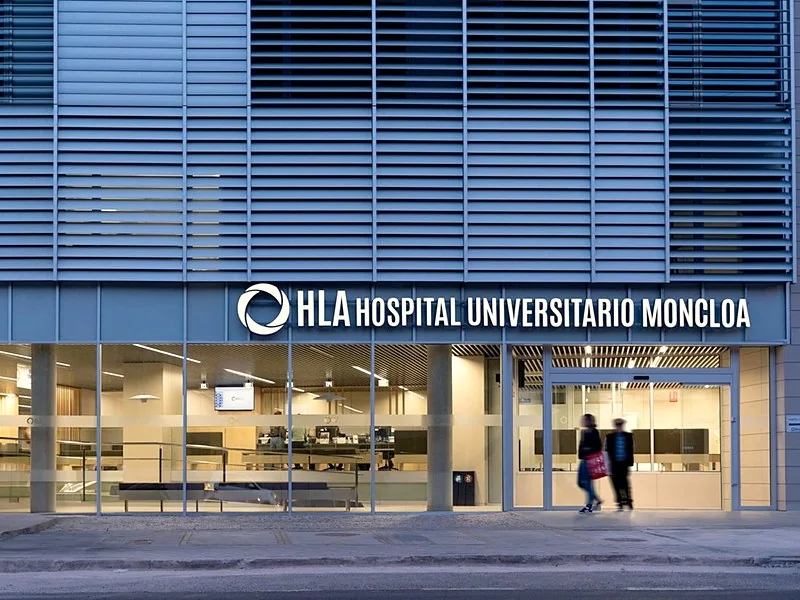
HLA Universitario Moncloa. Most of my operations are performed at Hospital HLA Universitario Moncloa, on Avenida de Valladolid. It is a university hospital with 14 operating theatres, a post-surgical recovery unit, 13 ICU beds and 262 single rooms. For four years running it has been ranked among the best hospitals in Spain by Newsweek, and it is the only hospital in Madrid certified for health tourism.
It is also where I teach the Intensive Course in Live Surgery on rhinoplasty: surgeons from several countries come to Moncloa to watch me operate, live from the operating theatre, with the same techniques and the same team I use when I operate on you. When I choose a theatre to teach in, I am telling you where I place my trust.
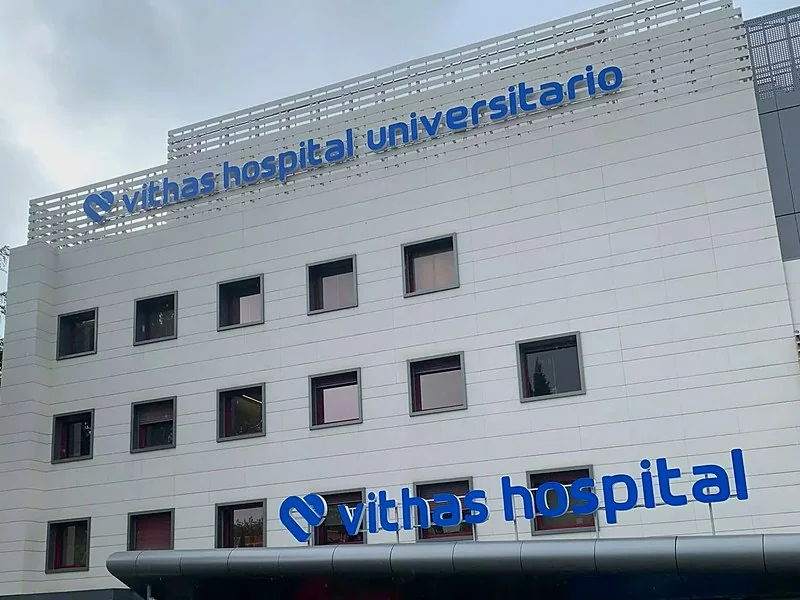
Hospital Universitario Vithas Madrid Aravaca. The rest of my surgery is performed at Hospital Universitario Vithas Madrid Aravaca, next to the A-6 motorway on the way out of Madrid. It is a private hospital with more than 10,000 operations a year, an intensive care unit and the same guarantees in theatre and on the ward.
We choose between the two according to the date, the type of surgery and which is more convenient for you.
Why a hospital and not a clinic?
I operate exclusively in hospitals, not in clinics. It is not more convenient for me; it is safer for you: a dedicated anaesthetist, my own theatre team, and recovery and intensive care in the same building.
A general anaesthetic can only be given in an operating theatre, and a theatre is only complete when there is a hospital behind it: an anaesthetist who does not leave your side, a recovery unit where you wake up under supervision, an ICU a few metres away should it ever be needed, a laboratory, a blood bank and on-call doctors in every specialty. In an operation that goes well, which is almost all of them, you notice none of this. It is there for the one that becomes complicated, and at that moment the difference between having it in the same building and having to call an ambulance is the only one that matters.
I have said it many times in the press and I stand by it: choose safety over trends, experience over special offers and science over fashion. The hospital is the first of those choices.
Who is with me in the operating theatre?
My team, the same one at every operation. In theatre I do not work with whoever happens to be on duty that day. My anaesthetist has been the same for years: the same person who interviews you before surgery at the pre-operative assessment, decides with you which type of anaesthesia is right for you and stays at your side from the moment you fall asleep until you wake up in recovery. The scrub nurse and the nursing staff know my techniques and the way I operate; that shortens the surgery and reduces surprises.
Before every operation a full pre-operative work-up is carried out: blood tests, an electrocardiogram and whatever other tests your case requires. If anything is not in order, we do not operate until it is. I explain the anaesthesia for each operation, and what the day of surgery is like, in Anaesthesia and the Day of Surgery.
How long will I stay in hospital?
Depending on the procedure, you go home the same day or stay one night. You wake up in the recovery unit and, if you stay, you spend the night in a single room with nursing staff a call button away. In both cases I see you before you are discharged. The theatre time, the type of anaesthesia and the hospital stay for each operation are on its own page; I do not repeat them here because they vary from one to another.
Where do the consultation and follow-up appointments take place?
At my practice in Madrid, at Calle Conde de Aranda 15. You go to the hospital on the day of surgery and little else. The first consultation, the pre-operative visits, the quote and all the post-operative check-ups take place at the practice. The follow-up appointments are included in the price and I carry them out myself. How to book your first appointment and what happens at it is explained in The First Consultation; what follow-up is like, in Recovery and Follow-Up.
I have always operated in hospitals
This is not a recent decision. I trained and have practised in university hospitals in Italy, the United Kingdom and Spain, I am certified to practise the specialty in Spain, Italy, the United Kingdom and the United Arab Emirates, and in Madrid I have operated at the Fundación Jiménez Díaz, at the Hospital General de Villalba, where in 2018 I broadcast a breast microsurgery operation live to 4,000 surgeons, and within the Quirónsalud group before concentrating my work at HLA Moncloa and Vithas Aravaca. Hospital-based plastic surgery is the only kind I have ever practised.
Other questions about where I operate
Can I choose which of the two hospitals I have my surgery in?
Yes, as far as the date and the type of surgery allow. We decide it together at the consultation.
What happens if there is a complication?
That is why I operate in a hospital. Recovery, the ICU, the laboratory, the blood bank and on-call doctors in every specialty are in the same building, so any problem is dealt with there and then, with no transfers. And after you are discharged I am still the one who sees you: I explain this in Recovery and Follow-Up.
How do I know whether a centre is safe to have surgery in?
Check four things before deciding, whether with me or with another surgeon: that the person operating on you is a specialist in Plastic, Aesthetic and Reconstructive Surgery; that there is an anaesthetist dedicated solely to you throughout the operation; that the centre has recovery and intensive care in the same building; and that you can stay overnight if necessary. What the law now requires of centres and professionals is explained in my article on the Ley Sara.
Start with the first consultation
If you are thinking about having surgery, the first step is for us to talk. At the first consultation I tell you whether I would operate and how I would do it. Book an appointment by phone or WhatsApp on +34 722 77 10 78. What that visit is like is explained in The First Consultation.
If I ever change hospital, this page will be updated the same day. What you read here is where I operate today.