
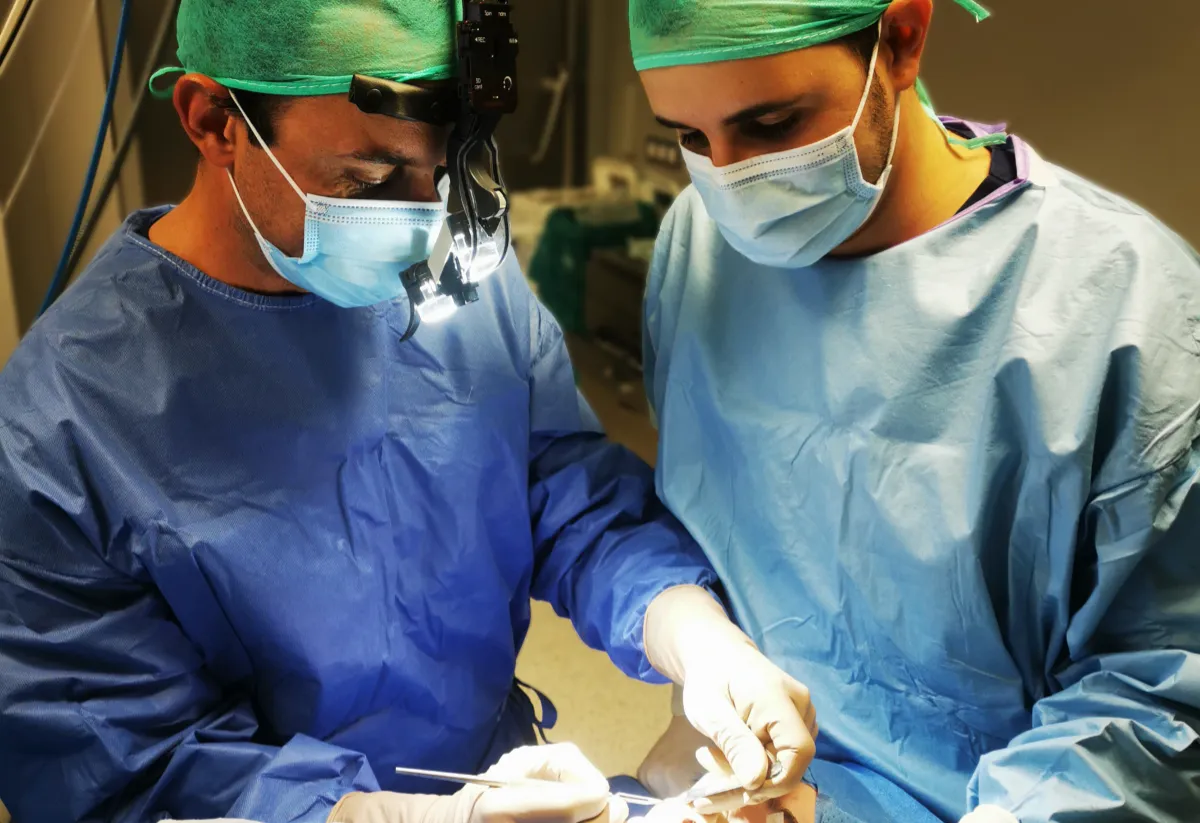
Are you looking for facial rejuvenation but fear the “tight,” “artificial,” or “operated” look?
The Deep Plane Facelift is the most advanced facelift technique and represents a revolution in aesthetic surgery.
Unlike traditional facelifts, this technique is not limited to tightening the skin but acts on the deep structure of the face to reposition tissues and return them to their original place.
The result is a comprehensive, harmonious, and above all, extraordinarily natural rejuvenation.
What is the Deep Plane Facelift and Why is it Different?
Facial rejuvenation has evolved. For years, operative techniques have focused on treating the most superficial layers. Now, the most advanced approach is to “reposition” all the layers that make up the facial soft tissues. Here we explain the difference.
The Limitation of Traditional Facelifts: Conventional methods focus on tightening the superficial layer (the skin) and, sometimes, plicating the SMAS muscle. This can cause that “windblown” appearance, and the results tend to last less time, as the skin is elastic and stretches back out.
The Deep Plane Revolution: This technique acts on a deeper plane, underneath the SMAS. The surgeon releases the ligaments that “tether” facial tissues (and that cause sagging and grooves) and repositions the complete unit of muscle, fat, and skin to a more youthful position.
The skin is not “pulled”; it simply accompanies the deep tissue. That is why the result is natural, without tension.
Key Advantages of Deep Plane Rejuvenation
This comprehensive approach offers benefits that go beyond superficial aesthetics:
Completely Natural Results: By repositioning the deep structures, the face maintains its expression and movement. No one will notice you had surgery; they will notice you look incredibly well. Read why Deep Plane doesn’t look ‘operated’.
Longer Duration (10-15 Year Results): By acting on the muscle (the support structure) and not on the skin (the covering), the results are much more stable and long-lasting. See the duration comparison here.
Comprehensive Rejuvenation (Mid and Lower Face): It is the only technique that effectively treats cheek descent, nasolabial folds, the jawline (jowls), and the neck in a single intervention.
More Comfortable Recovery: Although the technique is more advanced, since there is no tension on the skin, the postoperative period is usually more comfortable and with less bruising.
Impact on Confidence: The goal is to align how you feel inside with how you look outside. Read about the impact on self-esteem.
My Approach as a Facial Surgery Expert
“My priority in a facelift is naturalness. The Deep Plane is the best technique that allows me to ‘reset’ the facial anatomy, not just stretch it. It is the difference between restoring facial architecture in three dimensions and simply camouflaging the problem. We don’t change who you are; we give you back your own version from a decade ago.”
Real Results: Deep Plane Facelift Case
Theory is important, but results are everything.
Below you can see a real example of a patient who trusted our Deep Plane technique. This example is especially relevant because it shows the result just 1 month after the intervention.
Observe the redefinition of the facial oval and the naturalness of the neck-jaw transition, without the tension typical of traditional facelifts.


Early result (30 days post-op). Note the absence of visible inflammation and the recovery of structural firmness without altering natural expression.
Price of Deep Plane Facelift in Spain
t is not a standard procedure. The final price depends on key factors:
The unique anatomy of each patient.
The scope of the surgery: Whether only the lower third is treated or combined with a neck lift (cervicoplasty), blepharoplasty (eyelids), or other procedures.
The complexity of the case, especially in secondary surgeries.
To offer you a closed and honest quote, a personalized assessment is essential.

Frequently Asked Questions (FAQ) about Deep Plane
At what age is it recommended?
There is no “right” age. It is recommended when the signs of aging (sagging, tissue descent) are evident and the patient desires a lasting correction, not just temporary fillers.
How long is the recovery?
Generally, the social recovery time is about 2-3 weeks. Although it is a deeper surgery, the recovery is usually more comfortable as the skin is not under tension.
Are scars visible?
Incisions are strategically designed around the ear and in the hairline so that, once healed, they are practically imperceptible.
What is the difference with a SMAS lifting?
In a traditional SMAS lifting, the fascia is usually tightened or folded. In a Deep Plane, we work beneath the SMAS, releasing the ligaments and mobilizing the entire structure for a more natural and powerful repositioning.
The Rejuvenation That Reflects Who You Are Don’t let the fear of a bad result stop you from looking as you feel.