
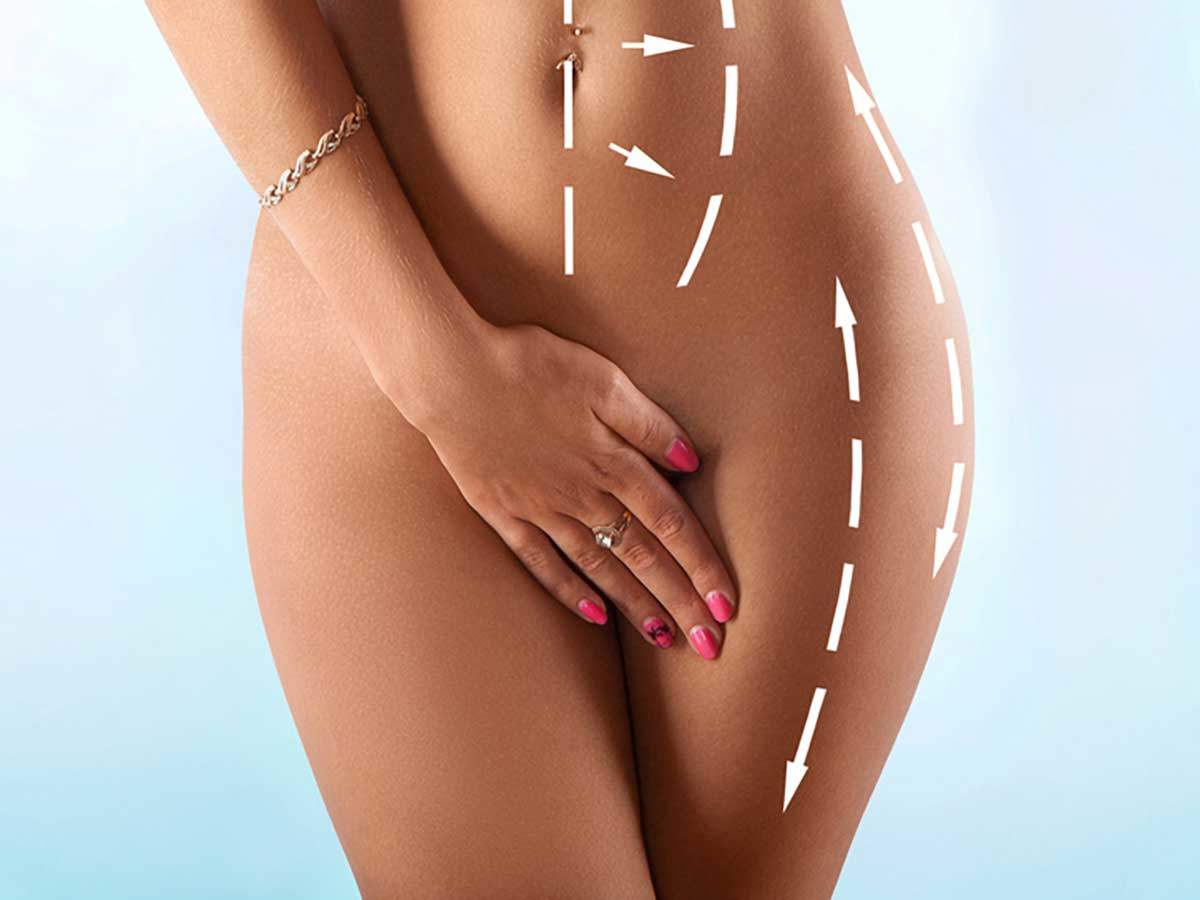
Labiaplasty, also known as nymphoplasty: correcting the size, shape or asymmetry of the labia minora.
Labiaplasty, also called nymphoplasty, is the surgery that corrects the size, shape or asymmetry of the labia minora. It is a straightforward procedure, lasting thirty to fifty minutes, performed under local anaesthetic, and you go home the same day.
Patients usually come to me for two reasons that go together more often than people think: physical discomfort and feeling self-conscious. Neither is trivial, and neither needs justifying in front of me.
What the labia minora are, and why they sometimes cause discomfort
The labia minora are the inner folds of the vulva. They are thinner than the labia majora and serve two important functions: they protect the entrance to the urinary tract from external agents, and they play a direct part in sensitivity and lubrication.
Normally they sit covered by the labia majora. When they protrude, they are in constant contact with underwear, and that is where the problems start: chafing when walking, pain during sport, discomfort during sex and a greater tendency to irritation.
Then there is what many patients tell me and which appears in no textbook: giving up certain clothes, avoiding the pool, or approaching intimacy preoccupied with how they look. That is also a valid reason to have surgery.
Why it happens
There is no single cause. The most common are:
- Congenital factors: they have simply always been that way.
- Hormonal changes, particularly during puberty.
- Childbirth and other trauma to the area.
- Menopause and ageing, which also darken and dry the skin.
- Certain medications and anabolic substances.
Having large labia minora is not an illness or a rare abnormality: it is a common anatomical variant. We operate when it causes problems, not because it needs correcting. If you have doubts about your own case, we look at it calmly at the first consultation.
Who it suits
In consultation I assess whether surgery makes sense in your case. It is generally a good option if:
- Your labia minora protrude, are asymmetrical or have lost firmness.
- You feel discomfort when walking, during sport or during sex.
- Your general health is good.
- You do not smoke, or can stop while the area heals.
- You come with a specific, realistic idea of what you want to change.
If I see in consultation that surgery will not solve what is worrying you, I will tell you. I would rather lose an operation than perform one that was never going to give you what you were looking for.
What the procedure involves
I mark the excess tissue and trim it following the pattern best suited to your anatomy, taking particular care around the area where the labia meet towards the clitoris, which is the most sensitive and the one best left alone.
The incision is closed with absorbable sutures, so there are no stitches to remove afterwards. It is done under local anaesthetic, sometimes with light sedation if you are very nervous. No hospital stay is needed: you go home a few hours after we finish.
Recovery, day by day
It is a sensitive area, but the procedure is less uncomfortable than most people expect. What to expect:
- First hours: minimal bleeding, managed with a sanitary pad.
- First days: discomfort and swelling, controlled with the prescribed medication.
- Healing complete: seven to nine days.
- Sport and sex: two to three weeks.
- Reviews at one week and one month.
Hygiene and rest in the first days are what most influence the result. I give you written instructions and you can write to me if anything is not going as expected.
What if it is the labia majora
The problem is not always with the labia minora. The labia majora can lose volume over the years or, conversely, be too prominent. These are different situations and are corrected differently: by removing excess skin in one case, or restoring volume with your own fat in the other.
If you are not sure which applies to you, do not worry: we look at that in the first consultation and it is the first thing I assess.
Why have surgery with me
- I operate in clinics with full safety standards and a private suite.
- Reviews and follow-up included. No hidden costs.
- Financing and surgical insurance options available.
- I see patients in English and Spanish.
Frequently asked questions about labiaplasty
Are labiaplasty and nymphoplasty the same thing?
Yes. They are two names for the same procedure: surgery correcting the size, shape or asymmetry of the labia minora. Nymphoplasty comes from the older anatomical term for the labia minora and is still in common use.
How long does recovery from labiaplasty take?
Healing is complete at around seven to nine days. There is discomfort and swelling in the first days, controlled with the prescribed medication. Returning to sport and sexual activity takes two to three weeks.
Is labiaplasty painful?
Less than most people expect. It is performed under local anaesthetic, sometimes with light sedation, so nothing is felt during the procedure. Afterwards there may be minimal bleeding and discomfort in the first days.
Do the stitches need removing?
No. The incision is closed with absorbable sutures, which disappear on their own as the area heals. Reviews take place one week and one month after surgery.
Are large labia minora an abnormality?
No. It is a common anatomical variant, not an illness. Surgery is considered when it causes physical discomfort or self-consciousness, not because anything needs correcting by default.
Considering it?
Book a first consultation. It is a conversation with no obligation in which I explain what can be done in your particular case and what result it is reasonable to expect.